
40
YEARS
OF
VISIONARY
SCIENCE.
SIGHT RESEARCH UK | CHARITY ANNUAL REPORT 2024 - 2025
Contents
|
Introduction |
3 |
|---|---|
|
Welcome from our Chief Executive |
4 |
|
Welcome from our Chair |
5 |
|
Our Mission & Vision |
6 |
|
Our Values |
7 |
|
Our Impact |
8 |
|
40 years of Visionary Science |
9 |
|
Our Finances |
10 |
|
Our Research Network |
11 |
|
Your Say in Saving Sight |
12 |
|
40th Events Calendar |
13 |
|
Can Al predict which diabetes patients will develop sight problems? |
14 |
|
Could inpatient care be avoided when treating bacterial keratitis? |
15 |
|
Is there a connection between eye movement and myopіс progression in children? |
16 |
|
Will using Al to diagnose rare eye diseases lead to more equal access to research and treatments? |
17 |
|
40 years of Transforming Lives |
18 |
|
Record gift total set last Christmas |
20 |
|
Leave a Lasting Legacy |
21 |
|
Remember A Charity week |
21 |
|
Charity Lottery |
22 |
|
The Big Half |
22 |
|
Acknowledgments |
23 |
INTRODUCTION
We're one of the nation's leading eye research charities, dedicated to saving sight through pioneering research. In this extra special edition of our Charity Report, we're celebrating a very significant milestone in our history.
As of 2026, Sight Research UK has delivered 40 years of visionary science. We have transformed the landscape of eye care, putting patients and progress at the heart of everything we do.
So in consideration of how far we've come, this edition honours the legacy of the past four decades and looks ahead to a brighter, clearer future for all.
Finally, we want to extend our appreciation and gratitude to the supporters who have been by our side along the way.
You've made us who we are today. Thank you for being part of our story.
Welcome from our Chief Executive
Welcome to Sight Research UK's Charity Report 2024-25. What a year of discovery and growth we've had!
When I joined Sight Research UK in 2024, I really wanted to get under the skin of the charity: to understand the value of our work, our place in the sector, our stakeholders' needs and how this all comes together to ensure that we deliver grant programmes supporting research with the best opportunities for future impact.
We've been working hard to build our capacity to meet this challenge. From staff team and trustee board growth to improving our technology and processes, top people, and skills. It's been a fast-paced and rewarding 12 months. With these building blocks firmly in place, we're ready to deliver our strategic objectives, which we believe will yield some immense results for the next phase of our research funding strategy.
Highlights this year include the launch of a rolling Researcher Visit programme, led by our Grants Manager so that we can authentically capture the essence of our charity's value at every given opportunity! Thank you to our hosts for kindly taking the time to share your work with us.
Relationship-building, grasping sector changes, and listening to feedback first-hand all have a fundamental impact on our emerging strategy. We'll continue this work to see to it that our support consistently meets research needs.
Another core piece of work that we've undertaken is the evaluation of our 2020- 2026 research strategy to look back on past successes and challenges before we look forward. We'll release our Impact Report this spring, prior to the new strategy launch in late summer/autumn.
More exciting activities are planned in 2026 and beyond. We're committed to liaising closer with our supporters and benefactors. What's clear to me is the potential that Sight Research UK has to make a real difference with our funding initiatives. We're keen to learn from our peers, adapt, and be open to collaborations that accelerate growth - a key focus in our fundraising and partnership programmes.
This report features just a few of the fantastic projects we've been funding. In November, we're hosting an online seminar as part of our 40th anniversary celebrations, where you'll hear directly from researchers, giving deeper insight into their incredible work. On the subject of our 40th, this edition contains all the wonderful events we have planned to celebrate this special milestone. There will be much cake!
I will sign off by thanking our trustees for your guidance and governance and our motivated and driven staff team - this year's successes would not have been possible without your dedication. Finally, I'd like to give sincere thanks to our supporters and donors. It's my intention to better understand your motivation for supporting us; to develop a deeper comprehension of the value and impact of our work. I can assure you, expanding communication and consultation with you sits firmly in our plans over the coming year. We look forward to another fruitful year and bringing you along with us.
Welcome from our Chair
I am delighted to introduce our 2024- 2025 Charity Report, which builds on another successful 12 months at Sight Research UK. It has been an important year, where we have taken steps to strengthen ourselves so we can deliver even greater impact for people living with sight loss. We have developed a deeper appreciation and understanding of our work to create a base from which to make important future decisions to achieve our charitable aims, vision and mission.
Over the past year, we have increased our team capacity by introducing three new roles to help secure funding, increase visibility and promote engagement. In addition, we have invested our internal resources in the training and development of the team to ensure robust governance and risk management. These changes enable and empower staff to successfully deliver the renewed strategic objectives, which take us into 2025-2026 and beyond.
We are ever grateful to all our supporters and donors and, in particular, legacy pledgers who continue to give so generously. In another year of uncertainty surrounding the cost of living and unstable global macroeconomics, fundraising continues to be competitive for all charities. We have identified this as a key challenge in our risk management strategy. It reinforces why we have chosen to invest in building capacity so we can increase and strengthen our campaigns and audience reach for future longevity.
I look forward to the year ahead with great excitement! 2026 is a landmark year for Sight Research UK, with our 40th anniversary being a particular highlight. We have lots of activities planned to celebrate this milestone. In addition, we will be releasing our first Impact Report, which considers the last five years of funding and its outcomes. We are also sharing a new Strategic Research Plan shaped by valuable teams that we have been honoured to support.
My heartfelt thanks also go out to all our donors, volunteers, patients, researchers, team, and universities. Together, we are moving closer to a future where no one has to face sight loss alone. Lastly, I would like to take this opportunity to thank my fellow trustees for their unwavering dedication to the charity over the past year. I very much look forward to working with them throughout this upcoming chapter.
Our Mission & Vision
OUR MISSION
Using our scientific network across the UK, we champion and accelerate innovative eye disease research. Through targeted investment into the most promising science, we will deliver meaningful impact for those living with sight loss.
OUR VISION
A clearer future for those living with sight loss.
Our Values
WE BELIEVE IN S.I.G.H.T.
SUSTAIN
We sustain long-term progress by investing in impactful research and building a future where sight loss can be prevented, treated, or even cured. We invest in and develop our team of motivated, skilled staff and volunteers to deliver our strategies for sustained organisational impact.
INDEPENDENCE OF THOUGHT
We champion independence of thought by being autonomous with our decision making. We empower researchers to explore pioneering ideas that can transform lives.
GALVANISE
We galvanise our national networks to deliver best practice, accelerate breakthroughs and drive meaningful change in the landscape of UK eye health. We incite research participation and involvement through engaging with diverse, inclusive communities.
HUMANISE
We humanise science by ensuring research leads to real improvements in people's lives.
TRANSFORM
We transform the future of eye health through research partnerships and patient-driven progress.
Our Impact
Over the past decade, we have spent £3.25 million financing research grants that have sought to uncover novel technologies and treatments that could one day prevent sight loss. Our latest Impact Report demonstrates that for every £1 Sight Research UK has invested in research into new advances in sciencе, therapeutics, diagnosis and interventions (from 2019 to 2025), researchers have been able to yield an additional £4,099 of funding. This yield has enabled commercial, academic, government, and research charities to advance their work as result of our initial investments. It demonstrates the potential of this research to be of future public benefit.
(Source: Annual Researchfish Report 2025)
Main achievements 2020 - 2026:
"I have known the charity for over 25 years. Back then, it was a much smaller organisation that had mostly local leanings due to its relationships with the University of Bristol and Bristol Eye Hospital. Now, Sight Research UK has evolved into a household name with far-reaching networks and national connections. It's striking how much they have done over the past 40 years to advance treatments for eye disease."
40 YEARS OF VISIONARY SCIENCE
Over the past 40 years, Sight Research UK has grown from one man's earnest endeavour to save sight into one of the country's leading charities focusing on eye research.
1986
Our Charity is founded by Professor David Easty MD FRCS, initially named the 'National Eye Research Centre' or 'NERC'.
In addition, we, along with other funders, establish the UK's first Corneal Transplant Service at the Bristol Eye Hospital.
1990s
Thanks to research we funded, the success rate of corneal transplants swelled from 50% to over 90%.
1999
We began a 5-year long research project to study post-surgery success of over 1,000 patients to reduce corneal rejections.
2000s
Our Charity diversifies its funding of more eye conditions thanks to donations from Bristol Eye Hospital patients.
2006
We receive a significant grant of £255,000 from the James Tudor Foundation, to fund research into preventing blindness.
2010
HRH Prince Michael of Kent unveils a commemorative plaque to celebrate 200 years of care at Bristol Eye Hospital.
2015
We launched our 'inSIGHTS to a healthy future' manifesto at Westminster to urge government action on funding eye research.
2019
This is the year our Charity is reborn as Sight Research UK, formerly the National Eye Research Centre (or NERC).
2022
Our founder, David Easty, passes away, leaving behind an incredible legacy of philanthropic work in the eye health sector.
2022
We open our Translational Research Award for the first time, offering significantly higher grants to eye research than ever before.
2026
Sight Research UK celebrates a very special birthday - 40 years of visionary science!
2024 - 2025
Our Finances
INCOME
|
DONATIONS (INCLUDING GIFT AID): |
£183,137 |
|---|---|
|
LEGACIES: |
£592,860 |
|
INVESTMENTS: |
£89,640 |
|
GIFTS IN KIND: |
£5,000 |
Income Total:
£870,637
EXPENDITURE
|
RESEARCH: |
£340,412 |
|---|---|
|
CHARITY MANAGEMENT & GOVERNANCE: |
£328,726 |
|
FUNDRAISING COSTS: |
£24,501 |
Expenditure Total:
£693,639
This year, we employed 8 members of staff.
.
Our Research Network
World-leading universities and hospitals form our national web of research excellence, totalling 28 active grants in 2024 - 2025.
Our scientific network spans from Edinburgh to Plymouth, with Translational and Seed projects pushing forward sight-saving treatments in glaucoma, myopia, age-related macular degeneration, and many other eye conditions.
University of Edinburgh
Queen's University Belfast
Ulster University
Sheffield Teaching Hospitals NHS Foundation Trust
University of Lincoln
University of Leicester
University of Birmingham
Brunel University of London
Moorfields Eye Hospital
University College London
Cardiff University
University of Bristol
University of Southampton
University of Plymouth
Your say in saving sight.
Donate to the cause that means the most to you. Which project will you choose?
Combat eye cancer
Current treatments for eye cancer often fail to prevent metastasis and can severely impact patients' quality of life.
The goal of this project is to fuel the development of a non-invasive, vision-preserving treatment that kills tumour cells, reducing the need for radiation or even eye removal.
"I hope to contribute to the development of a precise immunotherapy that can stimulate effective anti-tumour immunity while preserving healthy tissue and vision."
Help little eyes
Primary congenital glaucoma can cause blindness from a very young age, and although it has a genetic cause, we only know a handful of the genes involved.
By using a new genetic screening technology called long-read whole genome sequencing, this project aims to identify new genetic causes of glaucoma developed at birth.
"This [project] will allow us to help more families understand thе cause of their condition, as well as open up more options for new treatments to be developed."
Treat retinal disorders
Many eye diseases arise from abnormalities in the blood vessels that deliver oxygen and nutrients to the retina. These affect 2 million people in the UK.
To better understand how blood vessels behave, this project will investigate a protein called Piezo1, which is activated by the mechanical forces associated with vascular damage.
"By studying Piezo1, we aim to uncover key mechanisms underlying retinal disease and ultimately contribute to the development of novel therapeutic strategies."
40th Events Calendar:
JANUARY
A dynamic year of events is underway for a whole year of Sight Research UK's 40th birthday celebrations...
FEBRUARY
We celebrated our official birthday (12 February 2026) with a team office party! This date marks 40 years since our charity was founded.
MARCH
No events in March.
APRIL
Launch of Your say in saving sight (page 12). Voting now open! From April to December 2026, choose between 3 important causes to support with a gift...
MAY
It's time to Step UP for sight! From May to July, set yourself a challenge to raise funds for sight-saving research. The first 40 people to raise £40 will get a FREE Sight Research UK T-shirt.
OPTION 1:
- Walk, jog, or run 400,000 steps over 40 days (~10k a day).
OPTION 2:
- Do your favourite activity over 40 days. Cycle, swim, knit, paint - anything you like!
JUNE
Step UP for sight continues...
JULY
On 1 July, we're commemorating our 40th with a special event in Bristol.
AUGUST
Representatives of our charity team will attend the International Society for Sight Research Conference in Valencia, Spain (23-27 August).
SEPTEMBER
On Sunday 6 September, six determined Sight Research UK runners take on The Big Half in London.
OCTOBER
No events in October.
NOVEMBER
40 years of visionaries (4 November). Join us for an exclusive online seminar, featuring scientific visionaries who champion eye research.
DECEMBER
A future everyone can see (1 - 31 December). A new, enchanting Christmas appeal - coming soon!
Can Al predict which diabetes patients will develop sight problems?
"The practical and emotional impact of losing your sight from diabetes is catastrophic,"
says Professor Tim Jackson, Professor of Retinal Research at King's College London, "but it can be treated if it's detected early.
Many people with diabetes develoр diabetic retinopathy. This is when high blood sugar damages the retinal blood cells at the back of the eye. It can be difficult to diagnose because at first there are no symptoms, but if untreated it can lead to sight loss.
England's Diabetic Eye Screening Programme tests patients for this common complication. Until 2023, every patient was screened annually, but now 'low-risk' individuals (those with two consecutive clear tests) are only tested every two years. Research suggests that this change to the schedule may risk delaying or even missing diagnoses altogether.
Professor Jackson is leading a Sight Research UK-funded project to test whether an artificial intelligence (Al) model can predict if a patient is at high or low risk of developing diabetic retinopathy.
More than one million retinal photos from the Diabetic Eye Screening Programme have been used to train the Al model to successfully detect warning signs that the condition is developing. His multidisciplinary project team spanning ophthalmology, computer science and health economics - now aims to recruit more than 50,000 patients to test that the technology is not only effective but also cost-effective.
"We've designed this trial so that the patient pathway isn't altered. Instead, we will use Al to make a prospective prediction, then we will follow these patients to see whether or not that prediction was correct. If successful, we will aim to get a final grant to run a UK-wide, randomised controlled trial."
"Getting research findings adopted is very difficult. However, if we can show that this technology works, there's a high probability that any adoption could proceed at a national scale, because it occurs within the NHS infrastructure."
With 1 in 10 adults in the UK expected to be living with diabetes by 2030, this could lead to millions of patients being treated more quickly and cost-effectively, & fewer distressing cases of diabetes-related sight loss.
Could inpatient care be avoided when treating bacterial keratitis?
Bacterial keratitis is an infection of the cornea, which is the most common cause of vision loss worldwide.
Antibiotic eye drops administered hourly for the first 48 hours are the standard first-line treatment. As dosing adherence is crucial, patients with bacterial keratitis often require hospital admission. This costs the NHS around £2,400 per patient.
Recent studies have shown that when bacteria multiply, they form a protective slimy layer called a biofilm, which antibiotics can't penetrate easily. It's one of the reasons why bacterial keratitis can be so difficult to treat with available antibiotics. Over-prescribing also means that some bacteria have developed resistance to conventional antibiotic treatment. There is therefore an urgent clinical need to find alternative therapies to prevent corneal blindness.
Dr Imran Mohammed at Cardiff University's School of Optometry and Vision Sciences is developing a biofilm-busting therapy based on the body's natural defence system. With potentially 10 times the efficacy of a single antibiotic drop, it could avoid the need for inpatient care altogether.
Host defence peptides, which occur in all living things, fight infection. Each is made up of a different sequence of amino acids - like beads in a necklace. Dr Mohammed's team used the amino acid sequence of a peptide called human cathelicidin, which occurs on the eye's surface, to create a synthetic version called SMP16.
Thanks to funding from Sight Research UK, they have now completed a crucial preliminary phase in their research: to test the synthetic peptide in an ex vivo corneal infection model. The results showed SMP16 was able to penetrate the biofilm and kill the bacteria hiding inside more effectively than the antibiotic moxifloxacin- even at a low concentration.
"This indicates that we might be able to reduce not only the amount of a drug required to treat the infection but also the frequency of dosing,"
he explained. "So, it's an exciting result, albeit at an early stage."
"Without this funding, we wouldn't have known whether this peptide was able to work in a tissue environment. It means we now have the data we need to unlock larger funding grants for advanced animal studies and then, potentially, in human clinical trials."
Is there a connection between eye movement and myopic progression in children?
Myopia (short-sightedness) is a global health epidemic. More than one in three children are now affected.
Because myopic progression is associated with several sight-threatening conditions, including retinal detachment and glaucoma, scientists are scrambling to find solutions.
"If this trajectory continues, it will lead to huge numbers of young people having difficulties with vision, which we won't be able to treat effectively,"
explains Dr Daniela Oehring, Associate Professor in Eye and Vision Science at the University of Plymouth.
"As well as the obvious human costs, we are also talking about billions in terms of economic costs."
In most cases of myopia, the eye becomes elongated in shape. This elongation is linked to structural changes in the white outer part of the eye called the sclera.
When working with young children, Dr Oehring noticed that their eyes moved more when playing outdoors compared to indoors. She thinks that because more children are spending less time outdoors, their scleral tissue isn't getting the range of movement it might need, and that this could help explain why myopia develops.
Sight Research UK funding is helping her team to test this idea in the lab. They are running experiments to see if the communication between cells changes when scleral tissue is exposed to forces which either stretch or compress it.
"Our longer-term aim is to prove that if we apply stress in living tissue cells, they modulate their behaviour. If we can do that, it would be the first study ever to show that in eye tissue."
She explains, "The grant not only enabled us to build our testing rigs, it also helped fund a research assistant to run all the initial tests we needed and gather the high quality of data we now have. Without them, our study couldn't have progressed."
Dr Oehring's experiments are at an early stage. However, if they are successful, the findings could lead to a revolution not only in how we treat myopia but also in how we stop it from developing altogether.
Will using Al to diagnose rare eye diseases lead to more equal access to research and treatments?
Inherited Retinal Diseases (IRDs) are a leading cause of blindness in the UK. Although research opportunities and treatments are increasingly available, these can't be started without a genetic diagnosis - and this can take a long time, depending on where you live.
A University College London (UCL) team led by Dr Nikolas Pontikos has developed Eye2Gene. This method accelerates genetic diagnosis of IRDs using artificial intelligence (Al), which could help to reduce waiting times. In 2025, the academic journal Nature Machine Intelligence published a major paper about Eye2Gene's ability to support genetic diagnosis.
Now a Sight Research UK grant is funding a pilot of the Al at Moorfields Eye Hospital in London. This is being led by Dr Dayyanah Sumodhee, Health Psychologist and Senior Research Fellow at UCL.
She will evaluate how well the technology performs in one of the country's busiest IRD clinics and, crucially, how patients feel about it. The aim is to include up to 250 adults and children in the pilot over the next year.
"I'm very much looking forward to starting the data collection. Us researchers are often behind our laptops, but I love this part of my job because I'm with patients. It reminds us why we do what we do,"
Dr Sumodhee says. If the evaluation shows that it works in clinics and patients respond well to it, Eye2Gene could soon be seen in eye hospitals across the UK.
If this happens, it means patients could be better informed about their condition much earlier," she explains. "Not only will they be able to access research opportunities and targeted treatment, but also it will help them to feel less isolated. And I think that it will help to reduce the 'postcode lottery' situation that people currently face.
"Donations to Sight Research UK go a very long way for projects like Eye2Gene. Not only do they support positive impacts for patients, they also support researchers like me to build a career and to keeр contributing to research on eye care."

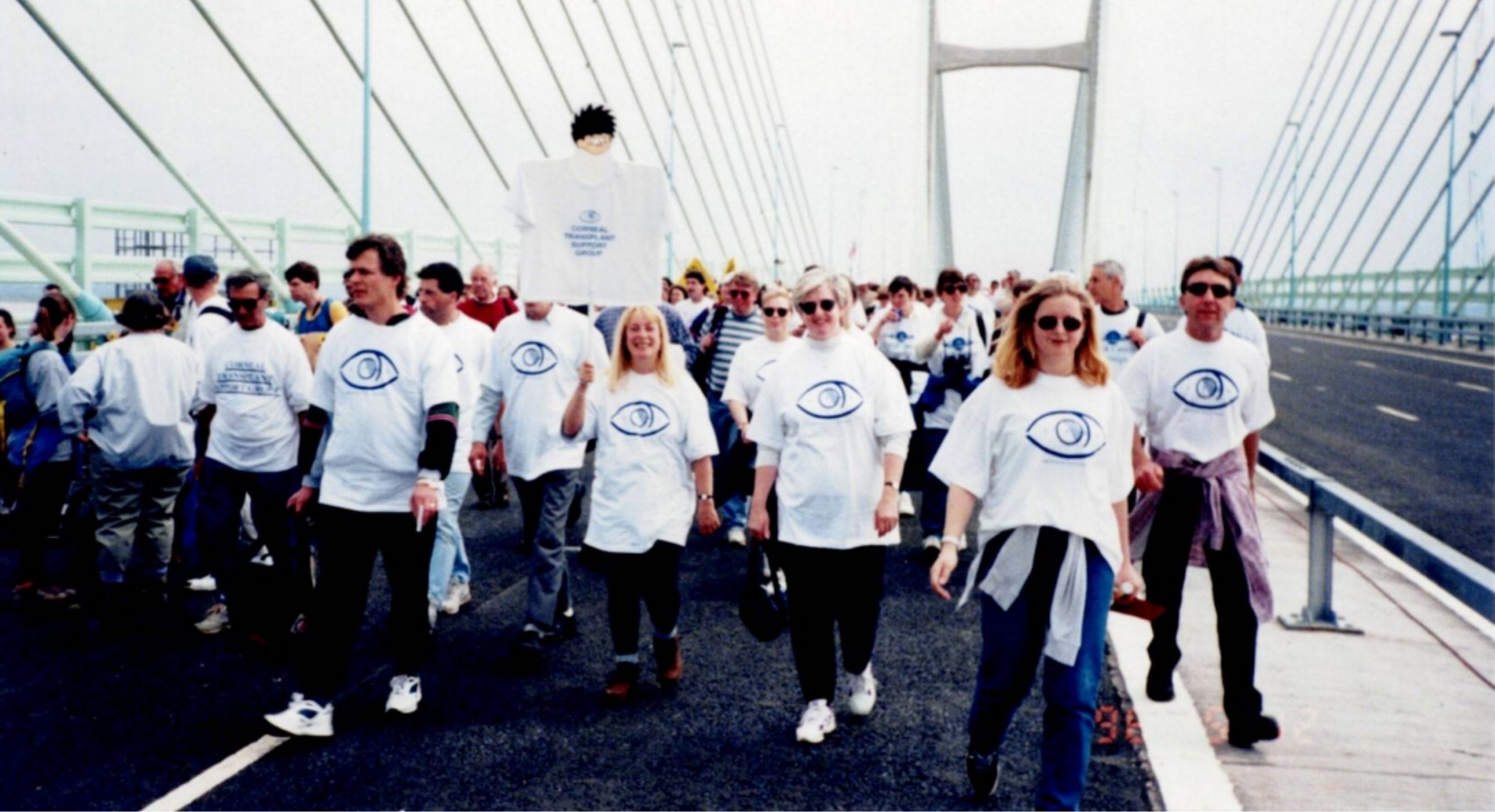
Annie (holding banner) and other members of the Corneal Transplant Support Service on an awareness march
Annie (holding banner) and other members of the Corneal Transplant Support Service on an awareness march

Graham (2nd left) and Professor David Easty (far right) in front of the Bristol Eye Hospital
Graham (2nd left) and Professor David Easty (far right) in front of the Bristol Eye Hospital

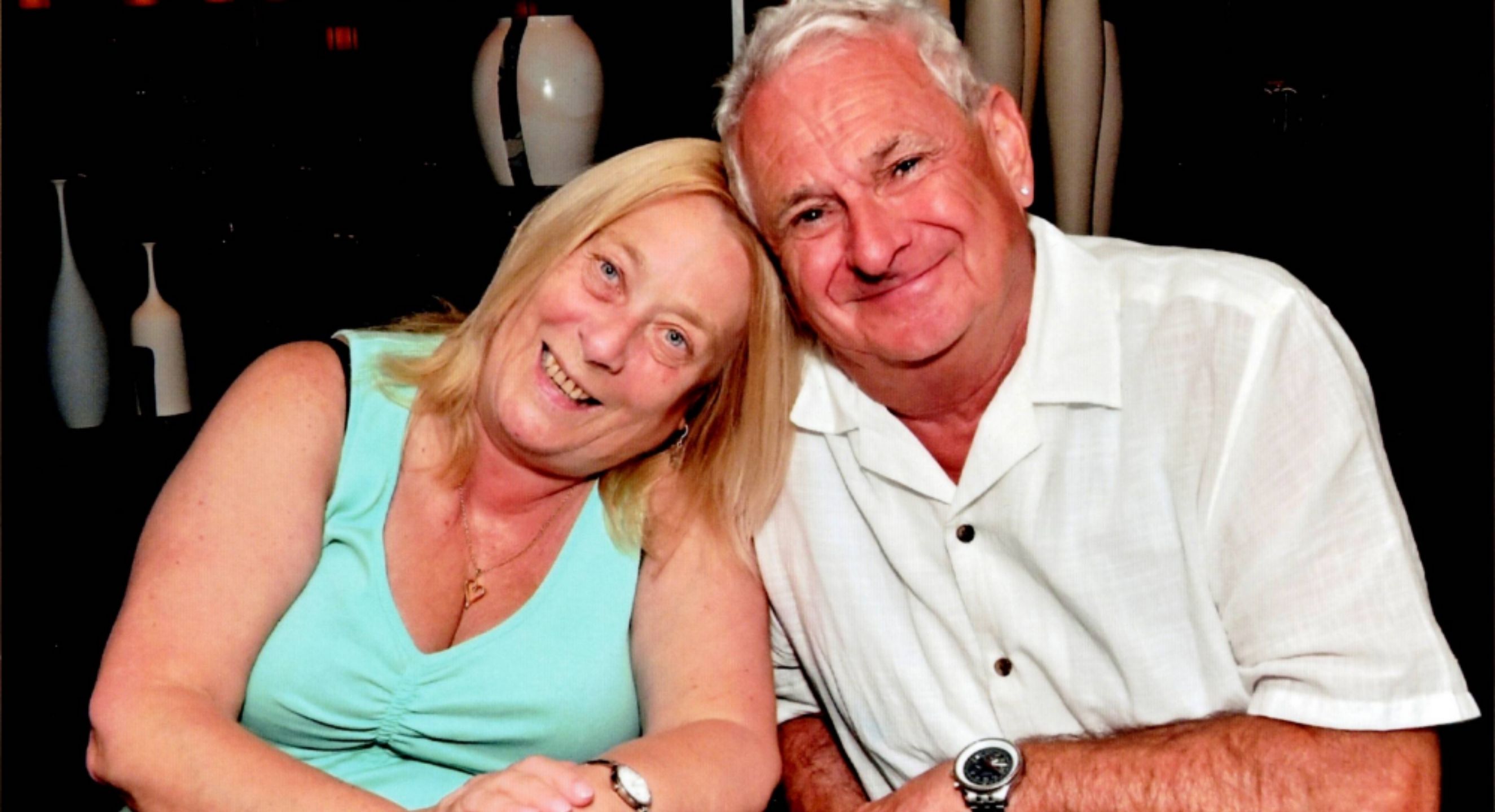
Annie (left) and Graham (right)
Annie (left) and Graham (right)
40 years of Transforming Lives
As Sight Research UK celebrates its 40th anniversary, it's the voices of those who were there at the beginning that help capture the charity's impact.
For Annie, the Admissions Manager at Bristol Eye Hospital from 1984 to 1997, the early days of the charity were driven by a simple but powerful belief: sight matters. "It was about time somebody was trying to promote organ donation," she recalls. At a time when eye health was not high on the charity agenda,
"Cancer, children and animals were the three big causes, eyes were very low down on the list."
However, a small but determined group set out to change that.
What began as a corneal transplant support group quickly became something bigger. Patients were anxious and often frightened, and they needed reassurance. Annie and Graham travelled to visit transplant recipients, easing concerns and sharing experiences. "We were talking people through what was going to happen, trying to ease their fears," Annie explains.
For Graham, the cause is deeply personal. Over the years he has undergone four corneal transplants. His journey has not been straightforward, with infections, round-the-clock eye drops and cancelled holidays. Yet his perspective is unwavering. "Would I do it all again in a heartbeat? Yes."
He reflects on what a corneal transplant really means.
"It isn't like a heart transplant or a kidney transplant. You won't die without it. But what it enables you to do is live a life. To continue working, to continue driving, to continuе being a useful member of society."
That point is powerful, sight treatment might not save a life, but it can change one.
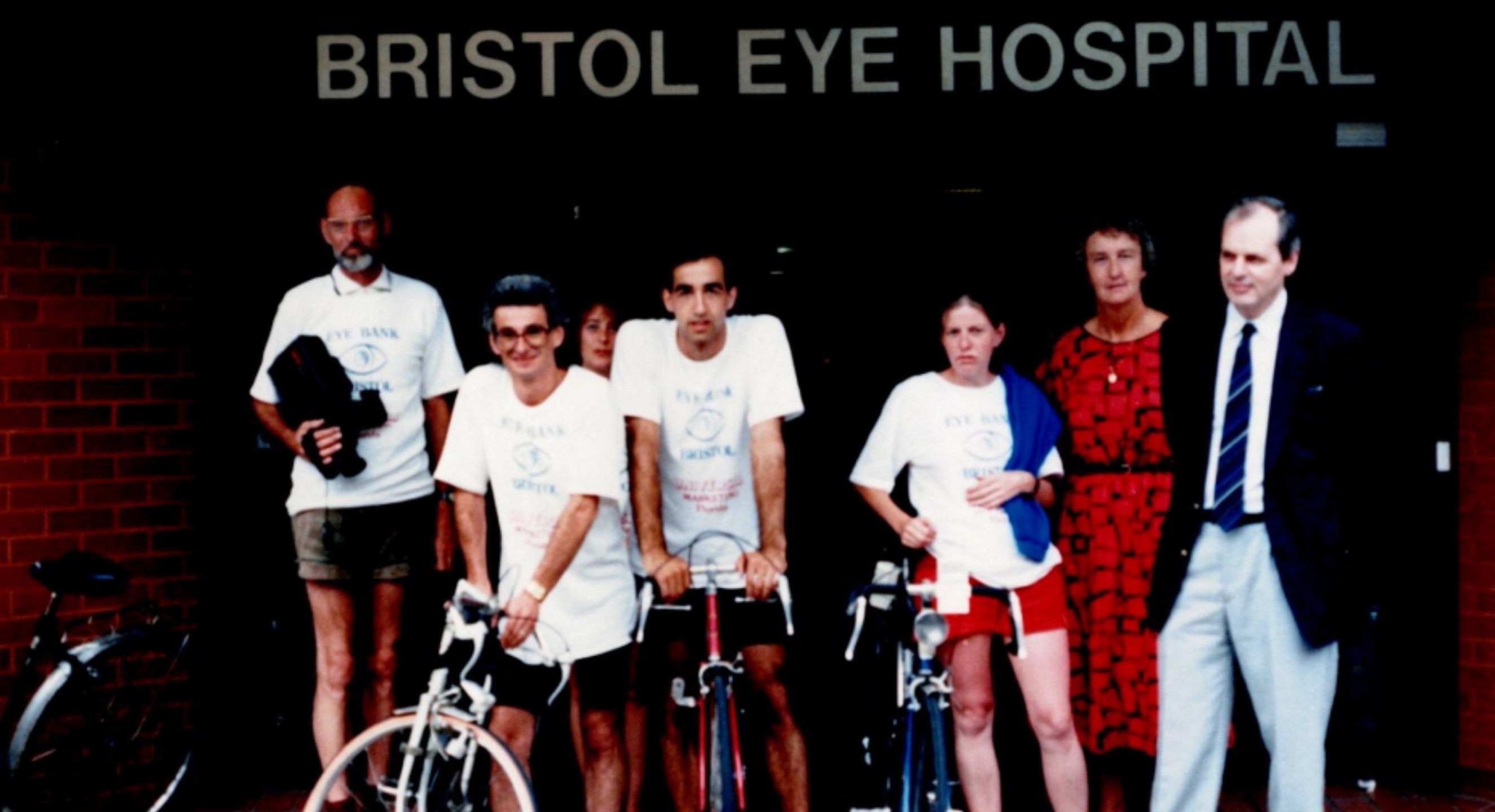
In the early years, fundraising efforts were incredibly varied. From 24-hour snooker marathons to cycling from the Manchester Eye Bank to Bristol, to garden parties and cake sales, the commitment was extraordinary. Funds raised helped purchase equipment which was essential for preparing corneas safely for transplant. Behind every bake sale and sponsored bike ride was a shared determination to drive eye health research forward.
Annie speaks warmly of the charity's founder Professor David Easty, whose passion was simple.
"All he wanted to do was operate. And research, that was the thing."
His vision helped establish a service where previously, as Graham puts it, "there was nothing." Today's advanced eye banks and transplant services stand on those foundations.
Graham and Annie are also quick to recognise the unseen heroes, the technicians, and laboratory staff who prepare donor corneas with meticulous care. "They never get mentioned," Annie says. "Yet without them, none of it would be possible."
Forty years on, Sight Research UK continues to champion and accelerate innovative research, bringing new treatments closer for people living with sight loss. Thanks to this progress, it has enabled Graham not just to see, but to travel, experience the world, and even to drive huskies across the Arctic tundra!
Graham and Annie's story is a reminder of what four decades of research can achieve and why the next forty years of the charity matter even more.
"I have had cataracts, laser treatment and an operation, and my granddaughter has oculocutaneous albinism, nystagmus and photophobia. She is now 30 years old and has coped tremendously well, although obviously not easily. I commend the work of Sight Research UK and congratulate you on your continued efforts for all who need them. It would be absolutely wonderful if treatments or cures become possible in the future."
Record gift total set last Christmas.
Last Christmas, we gave you our ask: help us raise £20,000 for sight-saving future research projects. Throughout December 2025, we partnered with Newmedica for a second year running to carry out our 'Seeing is Believing' festive fundraiser.
We know it's been a difficult and uncertain year for many. However, we have once again been blown away by the unrelenting kindness and generosity of our community.
It's an honour to announce that not only did you get us to our £20,000 goal, but your collective Christmas donations smashed our previous record!
So, we are delighted to announce that your doubled gifts bring this year's total to (dramatic pause...)
£29,036!*
"We are overjoyed to announce this year's Christmas campaign result, smashing the previous year's total of £28,136. Your support year on year truly makes a difference. We are also extremely grateful to Newmedica, whose team has once again gone above and beyond to double every donation made to eye research this season. Together, we have achieved something extraordinary,"
says Lucy Culkin, our Chief Executive.
We cannot thank you enough. Your Christmas donations will go towards transformative research with the aim of treating and preventing sight loss.
Every gift you committed to our campaign was matched pound for pound by our partners at Newmedica. Peter Bainbridge, Managing Director at Newmedica, adds,
"As an ophthalmology provider, we care deeply about eye health and making a difference. We're proud to work with Sight Research UK to help protect and restore vision across the country."
Newmedica cares for more than 165,000 NHS and private patients a year in more than 30 locations across England. They work with the NHS as well as local GPs and opticians to help treat and manage a range of advanced eye conditions in local communities.
*This total includes supporter donations, Newmedica matched funding, and gift aid.
Leave a Lasting Legacy
A clearer future with a gift in your Will.
Legacy gifts already make an extraordinary difference to us. In fact, 4 out of 5 of our research projects simply would not be possible without the generosity of those who choose to remember Sight Research UK in their Will.
Every legacy helps drive forward scientific breakthroughs that bring hopе, independence, and clearer futures for people living with sight loss.
In years to come, groundbreaking eye research for millions of people living with and affected by sight loss will be made possible. That's because of people like you who kindly choose to include a gift to Sight Research UK in their Will. We all want a clearer future.
Will you help with a gift in your Will?
Every gift makes a difference, regardless of size. We'll be happy to discuss your wishes with you, and you can change your mind at any time. To leave a lasting legacy, give your professional adviser our charity number: 1156134
Remember A Charity Week
In September 2025, we proudly took part in Remember A Charity Week, a national partnership of charities working together to raise awareness of the vital role that gifts in Wills play in securing the long-term future of charities. By joining this movement, we're helping to safeguard the future of eye research and support continued progress in preventing sight loss by ensuring our voice is heard by more people.
Our membership gives supporters access to high-quality, trusted information about Will writing, along with helpful resources and discounts from Remember A Charity's solicitor partners. It's a valuable source of guidance for anyone wishing to understand their options.
Explore more online at rememberacharity.org.uk for key information about Will writing, along with helpful resources and discounts from Remember A Charity.
We are now preparing for Remember A Charity Week 2026 and look forward to building on the momentum of our first year, continuing to raise awareness and inspire more people to consider leaving a gift that could transform the future of sight research.
Charity Lottery
What are your lucky numbers?
We've launched our very own charity lottery in partnership with All Weathers Lottery. It's a fun and sustainable way to back Sight Research UK while having the chance to win cash and other prizes, including a £25,000 jackpot!
Each weekly entry costs just £1, and every ticket helps fund pioneering research that aims to prevent sight loss and develop life-changing treatments. It's a simple way to make a difference all year round.
Since launching last year, we've already congratulated six winners, five in 2025 and another in January 2026. We love celebrating our winners while knowing that every play helps move sight-saving science forward.
The lottery is fully licensed and operates through our trusted partner, All Weathers Lottery, ensuring a safe, enjoyable experience for all. To get started, visit allweatherslottery.com/sight-research-uk/. Good luck!
The Big Half
This September, six fantastic supporters are stepping up to an exciting challenge to boost vital funds for sight-saving research (including our very own Fundraising Manager, Kerri!). They'll be taking on The Big Half in London, a buzzing half-marathon packed with community spirit and live entertainment. The route weaves along part of the legendary London Marathon course, from Tower Bridge to Cutty Sark.
We want to mark our 40th milestone with something bold, memorable, and full of momentum. Taking part in The Big Half is our first leap into the world of challenge events. We hope it will become a regular highlight in our fundraising calendar - giving even more of you the chance to get involved, get active, and champion our cause.
We'll keep you posted on our runners' progress, from training right through to the big day, and let you know as soon as more events are lined up. If you'd like to get involved in a future event, please reach out to us!
Acknowledgments
We are exceedingly grateful to everyone who helped us to deliver our mission this year, including members of staff, our Research Advisory Board, Seed Panel, Trustees, and external expert reviewers. Your insight has proved invaluable.
Our Trustees:
- Mr Simon Bowker (Treasurer)
- Dr Dolores Conroy
- Mr Robert Drewett DL
- Prof John Greenwood
- Mr Clive Hetherington
- Mr Philip Jackson*
- Mrs Carol Mayo (Chair)
- Prof Barbara Pierscionek
- Miss Serena Salvatore
- Mrs Antonia Seymour
- Mr John Swarbrick
*stepped down in the 18 months to 31 Dec 2025
Our Vice Presidents:
- Prof John Armitage OBЕ
- Prof Andrew Lotery MD FCROphth
- Prof John Marshall MBE
- Lady Wills
Our Research Advisory Board:
- Prof Matthew Campbell (Vice Chair)
- Prof Tim Curtis
- Prof Annegret Dahlmann-Noor
- Prof Lisa Hill
- Dr Victoria Kearns
- Prof Reinhold Medina
- Prof Luminita Paraoan (Chair)
- Dr & Assoc. Prof Salman Rahman
- Hon Assoc. Prof Teresa Sandinha
- Prof Mitra Tavakoli
- Prof Alex Wade
- Prof Colin Willoughby*
*stepped down in February 2025
Our Seed Panel:
- Dr Laura Cushley
- Dr Jennifer Dewing
- Dr Hannah Dunbar
- Mr Michael Gilhooley (Chair)
- Dr Philippa Harding*
- Dr Liying Low (Vice Chair)
- Dr Naseeb Malhi*
- Dr Ben Mead
- Dr Beth Mills
- Dr Mike Powner
*stepped down in 2025
We are especially indebted to you, our supporters. Our organisation exists to beat sight loss and bring clearer futures to people affected by it. Your donations, legacies and in-memory gifts have enabled us to make this happen - not only this year, but for the last 40 years. Thank you for making today's vision tomorrow's reality.
Trusts, Foundations, Clubs and Corporate Partners who made gifts over £500:
- Anonymous (9)
- Douglas Arter Foundation
- Himat Tanna Charitable Trust
- Hospital Saturday Fund Charitable Trust
- Newmedica
- Sir Samuel Scott Of Yews Trust
- The Basil Samuel Charitable Trust
- The Cecil Rosen Foundation
- The Condon Family Trust
- The Owls Of Pill
- The RS Macdonald Charitable Trust
Individuals who made gifts over £500:
- Anonymous (17)
- Chesney Allen
- Spencer Cleminson
- John Cottrell
- Robert Drewett
- Diane Liell
- Alan Martin
- Sheila Miller
- Angela Morris
- Philippa Neaverson
- Jane Pope
- Imelda Rice
- Nicholas Rogers
- Diane Saunders
- Gordon Slater
We received donations in memory of:
- Linda Amey
- Jean Fowler
We received legacies from:
- Roger Bell
- Beryl Calder
- Margaret Chant
- Jean Damey
- Alfred Gale
- Janet Gledhill
- Winifred Hook
- Susan Moore
- Pauline Robertson
- Jacqueline Vockings
- Valerie Zychon
Call us: 0117 325 7757
Email us: hello@sightresearchuk.org
Find our website: www.sightresearchuk.org
Join our mailing list: sightresearchuk.org/newsletter/
Write to us: Sight Research UK, Equinox South, Great Park Road, Bradley Stoke, Bristol, BS32 4QL
 Built with Shorthand